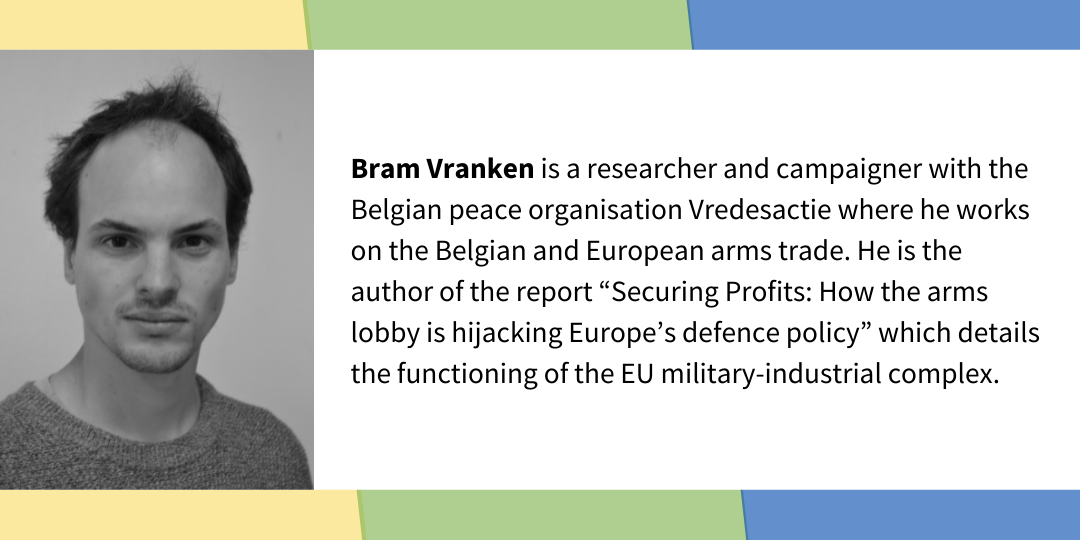
How militarised is the EU’s foreign policy? – Interview with Bram Vranken
Interview with Bram Vranke about the rapid militarisation of the EU, its drivers and consequences and steps to promote peace and justice in the EU.

Interview with Bram Vranke about the rapid militarisation of the EU, its drivers and consequences and steps to promote peace and justice in the EU.

We signed the statement of WILPF Italy supported by Disarmisti Esigenti and the European Associations of the ICAN Campaign that urges Members of the European Commission and the European Parliament to refrain from including nuclear energy as well as gas and CCS in the transition to decarbonization.
The European Union treats refugees on its borders as if they are bombs, says activist and co-founder of Lesvos Solidarity, Efi Latsoudi.
Feminist perspectives and voices in international politics on issues relating to foreign policy, international security and war are growing louder as a source and site of discursive political action and policy transformation. In contribution to there sites of political action and transformation, WILPF Germany launched a toolkit on feminist foreign policy.
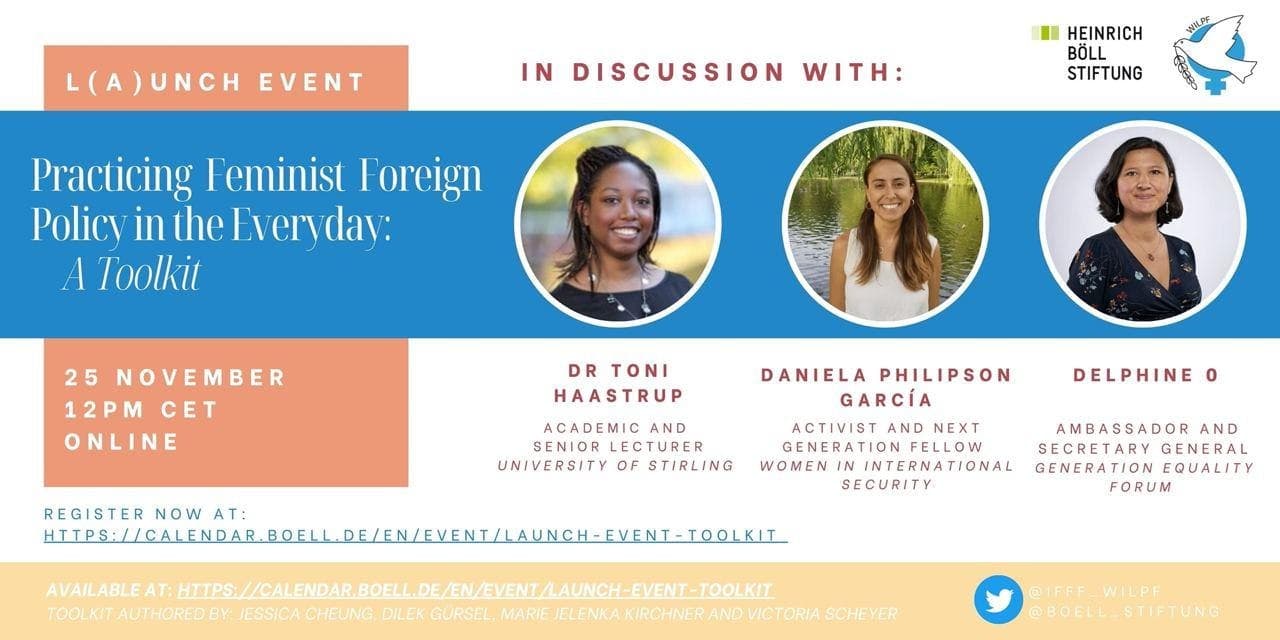
We invite you to join the l(a)unch event of the latest publication “Practicing Feminist Foreign Policy in the Everyday: A Toolkit” published by WILPF Germany in cooperation with the Heinrich Böll Foundation. The event will take place in English.
By providing an analysis of Germany’s foreign and security policy priorities, decision-making processes, and multilateral engagement from a feminist perspective, this policy brief written by the Centre for Feminist Foreign Policy and WILPF Germany identifies entrenched militarisation in Germany’s foreign and security policy.
To understand the lasting power of the heavily militarized world system, it is crucial to untangle how we – as individuals, as countries, as a global political economy – tend to privilege militaries and why. This privileging is because we have constructed a world system in which the state is the default actor, and the primary goal of the state is the aim to remain sovereign at any cost.

We - the German section of the Women's International League for Peace and Freedom - view the burgeoning anti-Semitic violence and anti-Muslim racism in Germany, Austria and other countries in recent weeks with great concern and deeply condemn it.
WILPF Germany stands in solidarity with the people in Gaza, the West Bank, Jerusalem and Israel. Those people who are currently still living in life-threatening situations and fear, who are victims of violence, who experience violence in their environment and who mourn those who have died or are injured.
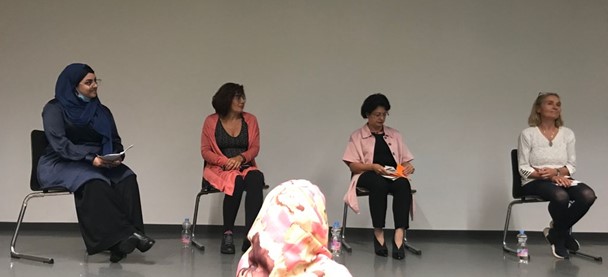
The disarmament program Reaching Critical Will hosted a roundtable discussion on May 26, 2021, in which feminist voices from New Zealand/Aotearoa, Australia, Italy, Japan, and Germany spoke and critiqued what militarization means in their respective contexts.